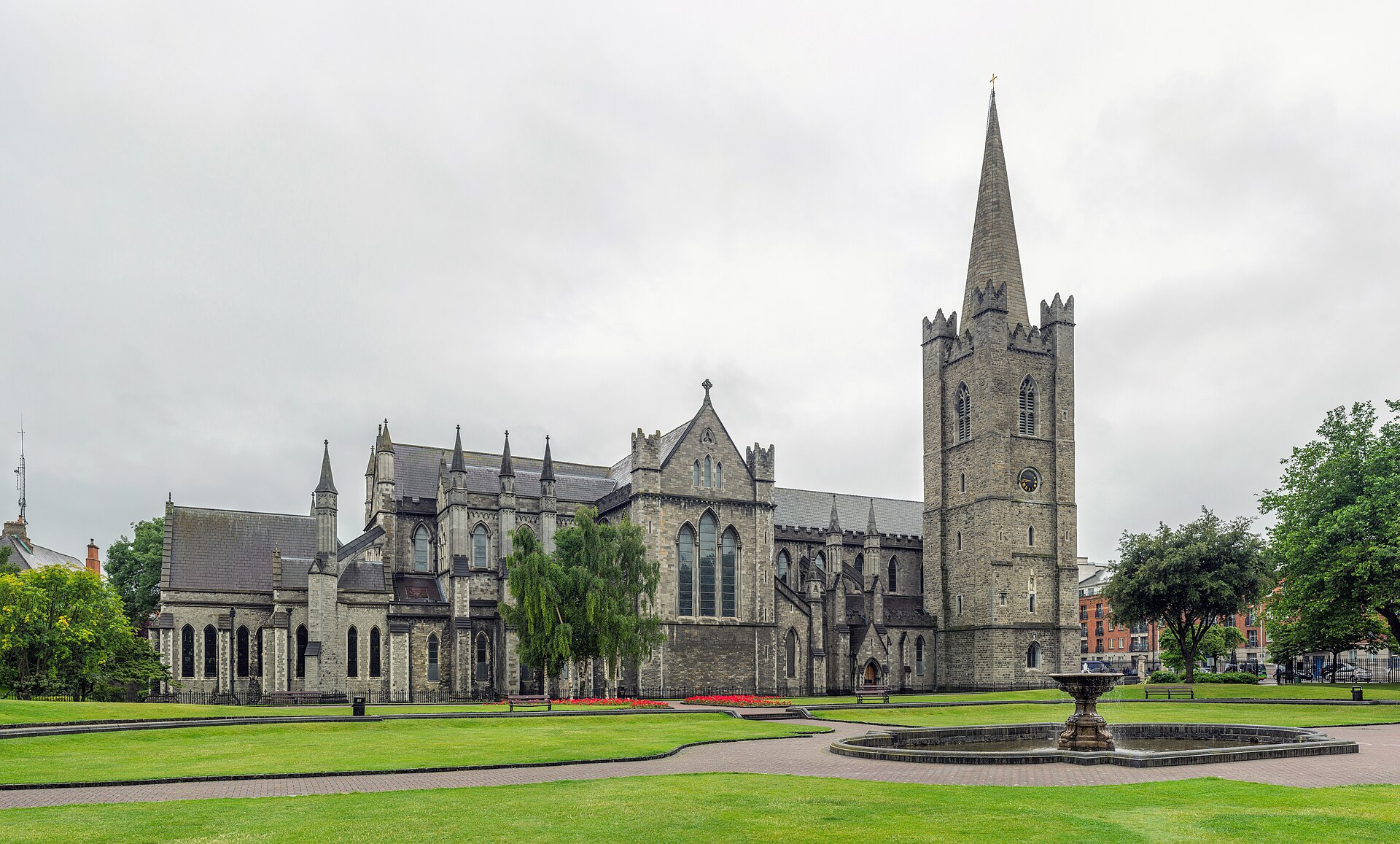
St Patrick's Cathedral
St Patrick's Cathedral in Dublin is the national cathedral of the Church of Ireland and the largest church in the country. Founded beside a well where Saint Patrick is said to have baptised converts, the present Gothic building was largely constructed between 1220 and 1260, making it one of the most important medieval buildings in Ireland.
The cathedral is closely linked with the satirist Jonathan Swift, author of Gulliver's Travels, who served as its dean from 1713 to 1745 and is buried within alongside his companion Stella. Its long nave, choir stalls of the Knights of St Patrick, and a wealth of monuments and memorials make it a rich record of Irish history.
Extensively restored in the 19th century with funding from the Guinness family, St Patrick's remains a working cathedral with a renowned choir and a strong tradition of choral music. As a place of national commemoration and daily worship, it stands as one of Dublin's most visited and cherished landmarks.
- Annual visitors
- ≈ 600,000
- Location
- 53.3394, -6.2714
- Local time
- 18:13 (Europe/Dublin)
🕘 Visiting hours
| Mon–Fri | 09:30–17:00 |
| Sat | 09:00–18:00 |
| Sun | 09:00–10:30 |
Sunday visiting very restricted around services; approximate
✨ Saints & blessed venerated here
-
Patrick Saint
Patron of Ireland; cathedral founded by a well where he is said to have baptised converts
-
Brigid of Kildare Saint
National patroness of Ireland venerated in the cathedral's tradition
-
Columba (Colmcille) Saint
One of Ireland's three patron saints honoured here
-
Laurence O'Toole Saint
12th-century Archbishop of Dublin and patron of the city
Care & donations
The Dean and Chapter of St Patrick's Cathedral
Admission charge for visitors; donations welcomed; free entry for worship
Official website →The candle wall
5 candles burning now · 157 places
18:13
Tap an empty holder to light your own candle · €2.00 · hover a flame to see its intention